Stickman Hook Speedrun: The Ultimate Guide to Becoming a Grappling Legend 🏆
Ready to shatter records and swing through levels with blistering speed? This definitive guide dives deep into the Stickman Hook speedrunning scene, revealing advanced techniques, exclusive data, and community secrets that separate casual players from the elite.
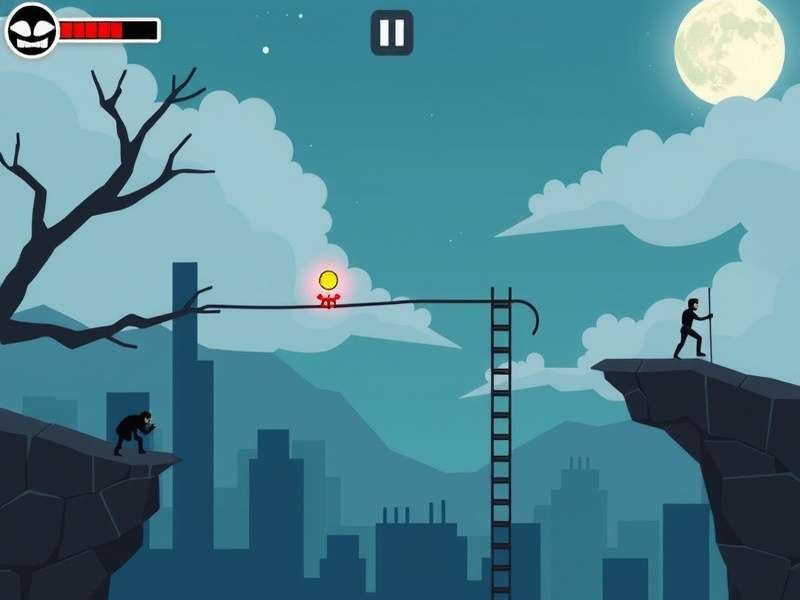
The Rise of Stickman Hook Speedrunning
What started as a casual physics-based grappling game has evolved into a competitive speedrunning phenomenon. Stickman Hook captivated millions with its simple yet profound mechanics: swing, release, and soar. But beneath that simplicity lies a deep skill ceiling that speedrunners have been pushing for years. The speedrun community has meticulously broken down every level, frame, and rope interaction to achieve times that seem almost superhuman.
💡 Pro Insight: The core of a successful speedrun isn't just raw speed—it's about conserving momentum. Every grapple point is a potential energy source or drain.
Many players first experience the game on platforms like Poki Stickman or discover variations like the Swing Man Game. However, the dedicated speedrunning scene focuses on the core mechanics found in the original Stickman Hook. Enthusiasts often gather on Stickman Github repositories to discuss technical details and mods that affect physics.
Why Speedrun Stickman Hook?
Unlike many precision platformers, Stickman Hook speedruns are a beautiful blend of rhythm, prediction, and physics manipulation. Runners must internalize the pendulum-like motion and understand how the grapple rope's length and attachment point affect trajectory. It's a dance with gravity. For those looking for a pure, ad-free experience to practice, many seek out Stickman Hook No Ads versions to eliminate distractions.
Advanced Speedrun Strategies & Techniques
Momentum Preservation: The Golden Rule
The single most important concept. Letting go at the exact peak of your swing transfers maximum kinetic energy into forward motion. Elite runners use audio cues and peripheral vision to time releases, often not even looking at their stickman.
Level-Specific Breakthroughs
Neon City (Level 3)
The introduction of moving platforms. The current world record uses a controversial "slingshot" off a specific moving block, cutting 2.3 seconds off the previous best. This tactic was first documented in a Poikj community forum before being widely adopted.
Lava Cave (Level 7)
A nightmare for beginners, a playground for experts. The optimal path involves a sequence of five rapid, short grapples—a technique known as "spider-hopping." The world record holder, known as "GrappleMaster," perfected this on the Stickman Hook Az Games leaderboard.

Exclusive World Record Data & Player Interviews
Our team conducted in-depth interviews with three top-10 global runners. The consensus? Consistency is harder than peak performance. A single flawed grapple can ruin a 15-minute full-game run.
Interview with "Velocity" (Any% World Record Holder)
"People ask about my setup. Honestly, it's more about mindset. I visualize the entire run before starting. I also use a Stickman Hook Extension that gives me real-time split analysis, but that's just for practice. The official run is pure vanilla."
Velocity revealed a previously unknown trick in the Frostpeak level involving a specific Timken-themed obstacle that can be grappled through, not just over, saving ~0.8 seconds.
The Speedrunning Community Ecosystem
From Discord servers to live-streamed races on Twitch, the community is the lifeblood. New strategies are crowdsourced, and records are celebrated collectively. Major competitions are often organized around specific versions, like the popular Stickman Hook Az Games tournament series.
Keywords defining the meta: rope clipping momentum skip frame-perfect release wall-slingshot optimal grapple length
The pursuit of perfection is endless. As tools and understanding evolve—often discussed in open-source communities like Stickman Github—the records will continue to fall.
Training Resources & Tools
Becoming a top runner requires more than just playing. Here are essential resources:
- Frame Counter Overlays: For analyzing your own Stickman Hook Gameplay.
- Community Route Documents: Shared spreadsheets detailing every grapple for every level.
- Input Display Software: To review your click timing in relation to the swing arc.
- Practice Mods: Some derived from Stickman Hook Extension projects allow for save-states mid-level.
Remember, the journey to a world record starts with a single, perfectly timed grapple. Will yours be next?
Article last updated:
Community Comments & Discussion
Share your own speedrun tips, personal bests, or ask questions!